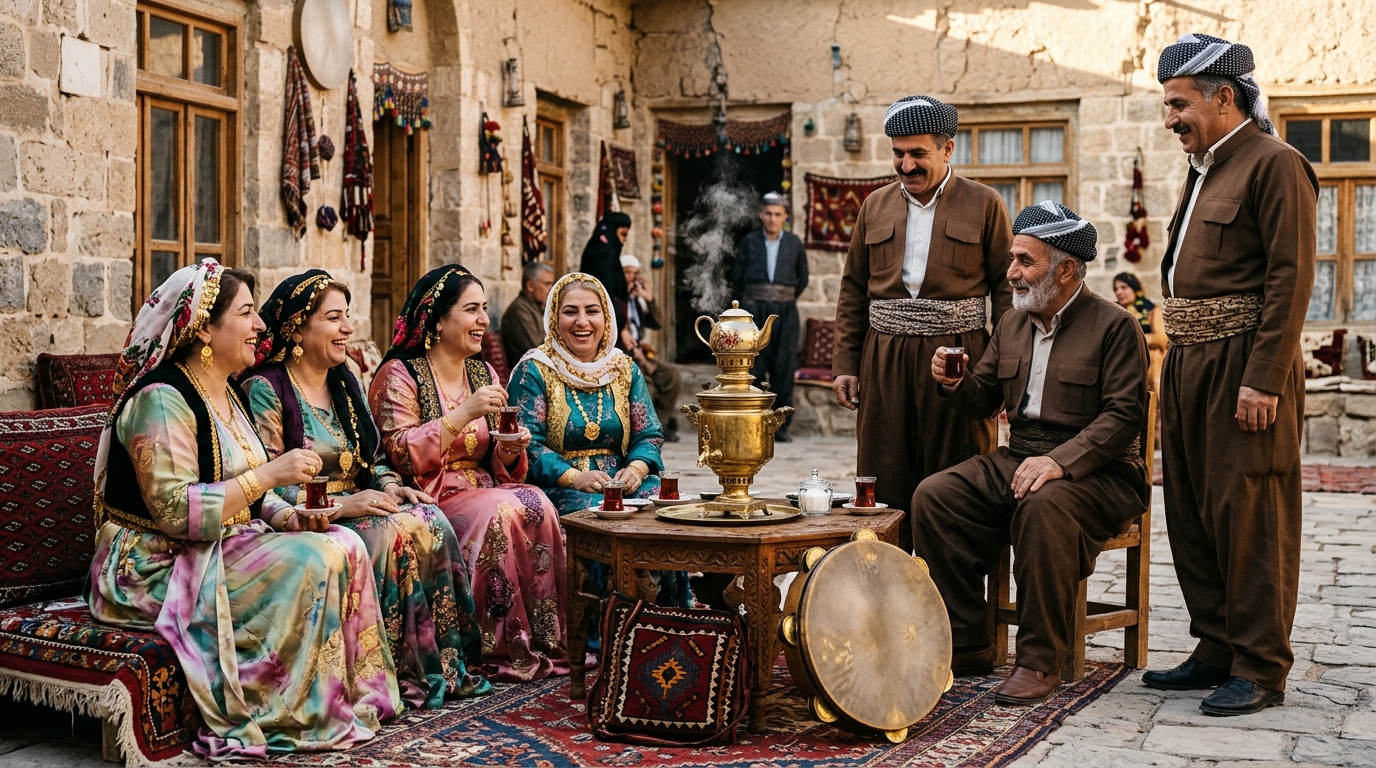
To truly comprehend an ancient city, one must look beyond petrified stone fortifications and listen to the pulse of everyday life: the lyrical cadence of mother tongues, the flowing drapery of silk sleeves in circle dances, and the haunting resonance of the shepherd’s reed flute floating across misty Zagros hills. The culture of Saqqez is a living stream of Aryan roots, pastoral nobility, poetic genius, and profound human solidarity.
Timeless Customs; From Noruz Bonfires to ‘Mirmirin’
Noruz (New Year) in Saqqez is celebrated with monumental communal bonfires lit atop Mount Jaqel, accompanied by thousands performing the synchronized Halparke circle dance in radiant traditional attire.
Among the city’s ancient folk traditions is Mirmirin (the Five-Day Spring Ruler), a carnival comedy where a commoner was elected temporary ruler to issue satirical decrees and critique feudal power. On long winter nights, families gather for Shewnishini to play the traditional Gorawabazi (the ancient sock-and-bead strategy game).
Kurdish Music; Beyt, Heyran, and the Sacred Daf
Saqqez sits at the heart of Mukriyan’s vocal tradition, celebrated for epic ballad recitations (Beyt) and passionate pastoral melodies (Heyran). The Shmshal (traditional shepherd’s end-blown flute) evokes ancient pastoral epochs, while the rhythmic heartbeat of the Daf drum echoes through historic Sufi lodges and the venerable Two Minaret Mosque.
Literary Giants and Cultural Figures
- Sayed Kamel Imami (Awat): Celebrated mystic poet and scholar whose Ghazals remain beloved across Kurdistan.
- Zhila Hosseini: Pioneering modernist Kurdish poetess whose vibrant verse gave voice to contemporary women of Kurdistan.
- Mirza Abdulmajid Malek al-Kalami: Master Qajar calligrapher and court scribe.
- Ostād Omar Farouqi: Lifelong historian and author of the seminal history of Saqqez.
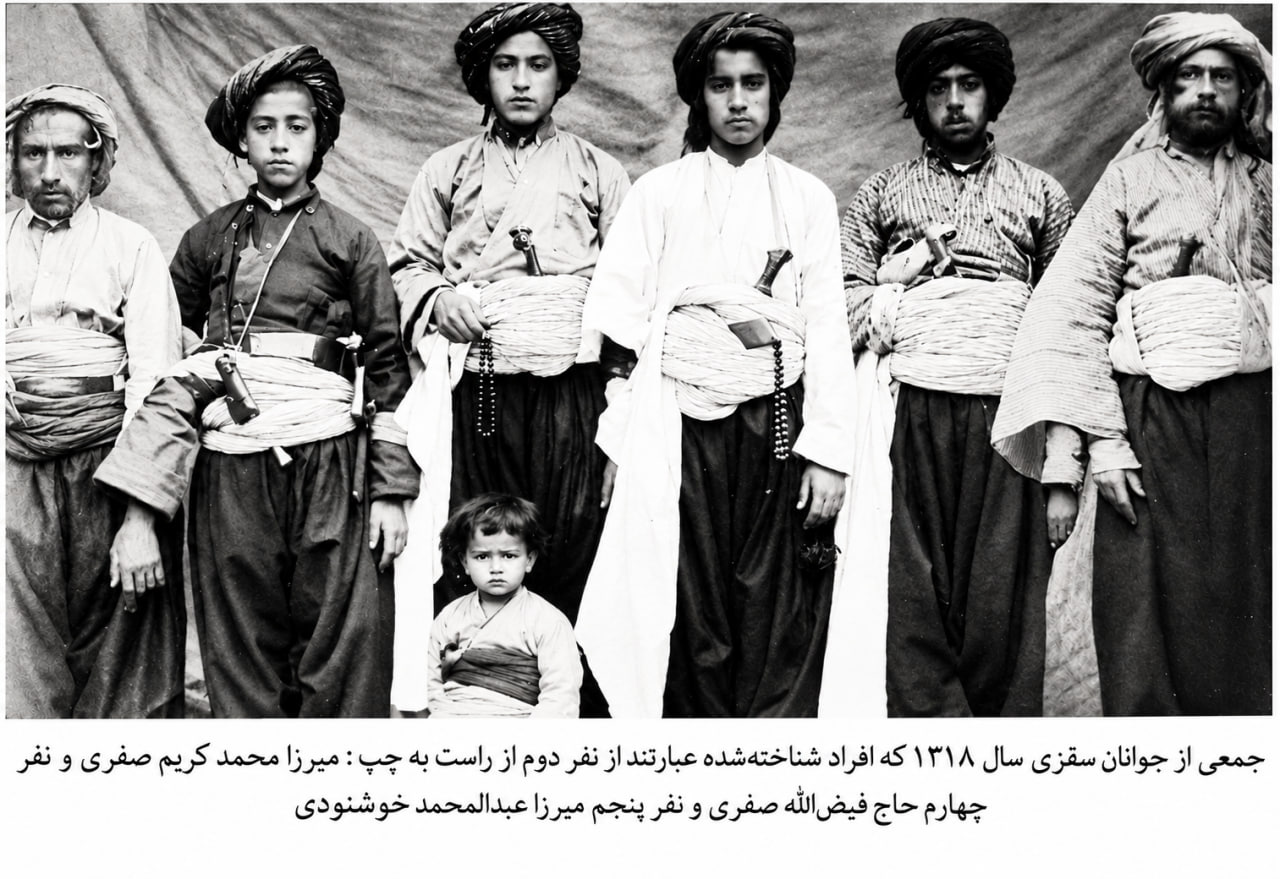
Archival photograph: Youth of Saqqez in 1939 wearing traditional Chokha u Rank.
Kurdish Attire; Elegance and Function in the Mountains
Women’s Dress: The flowing Kras gown featuring triangular silk sleeve extensions (Sorani) worn under velvet vests (Soxme) and embroidered jackets (Kolanje), adorned with silver coin belts and silk scarves (Hewri).
Men’s Suit: The Chokha u Rank, hand-tailored from natural mountain goat wool (Merghoz), secured by a long sash (Pushtwen) and complemented by handmade Klash espadrilles.