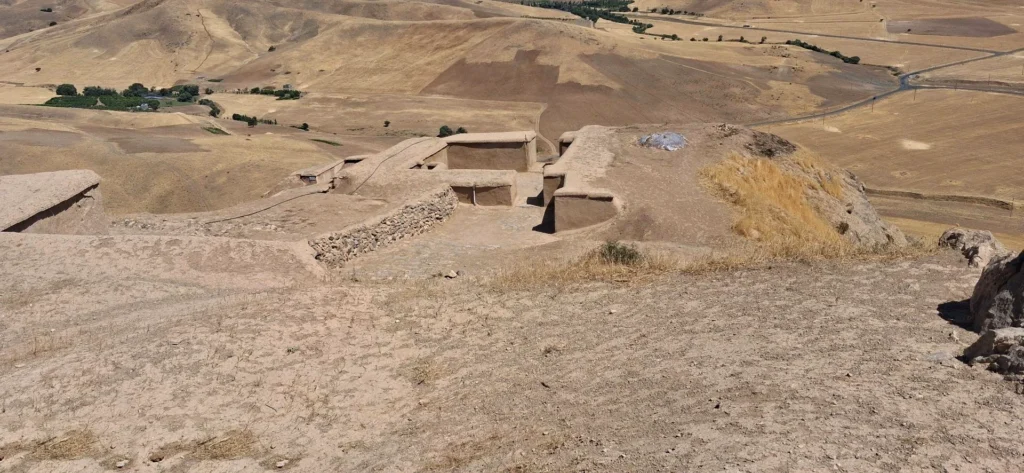
Ancient Ziwiye Castle (also known as Ziviyeh Citadel) is one of the most prominent archaeological sites in the Zagros highlands of Northwestern Iran, dating back to the first millennium BC. Perched atop a steep natural promontory 55 kilometers southeast of Saqqez, it served as an impenetrable administrative, military, and ceremonial seat for the Mannaeans and later the Medes, controlling essential trade and defense corridors between Assyria, Urartu, and the Iranian plateau.
Historical Significance & Mannaean Kingdom
Systematic excavations confirmed that Ziwiye flourished between the 9th and late 7th centuries BC. The Mannaeans skillfully maintained cultural and political autonomy amidst the fierce geopolitical rivalry between Assyria and Urartu. When the Medes emerged as the dominant power, Ziwiye was integrated into the Median kingdom, leaving a profound architectural and artistic legacy that directly influenced later Achaemenid Persian civilization.

Three-Tier Architecture & The Earliest Hypostyle Hall
The citadel was engineered across three terraced rock levels:
- Upper Terrace (Royal Residence): Houses ceremonial halls, reception suites, and commander quarters with panoramic 360-degree vistas.
- The Hypostyle (Columned) Hall: Features two rows of round carved stone column bases. Archaeologists regard this as the oldest known columned hall prototype in Iranian architectural history, paving the way for Persepolis.
- Middle Terrace & Kitchen Courtyard: Service quarters, grain silos, and water conduits connected through stone-paved corridors.
- Monumental Rock Staircase: 21 steps carved directly into the living rock bed to connect the defensive terraces.

The Legendary Ziwiye Treasure
In 1947, heavy autumn rains exposed a massive bronze chest buried under the mound, accidentally discovered by a local shepherd. This initiated formal expeditions by French archaeologist André Godard and American Robert Dyson. The unearthed horde included gold pectorals with mythological winged beasts, silver bracelets with lion finials, and carved ivory plaques. Today, Ziwiye’s masterworks are treasured exhibits at the National Museum of Iran, the Louvre Museum in Paris, the Metropolitan Museum of Art in New York, and the British Museum in London.
